




International reality and international relations
| Subject | International reality and international relations |
| Semester | 1st semester (autumn) |
| Type | Required |
| ECTS | 6 ECTS |
| Study programme: | Business studies (Master) |
| Primary language: | Slovene |
The course will be carried out in the Slovene language and is an elective course in accordance with the officially approved curriculum of the Masters' Degree Program in Business Studies.
Preconditions
Students must have a sufficient general knowledge, an adequate vocabulary and knowledge of Slovene language to be able to follow and communicate with the lecturer and other students, to understand the study materials and to be capable of preparing practical exercises and seminar papers.
Goals
Students must know and understand the working of the international society from sociological, juridical and historical point of view. They must know how the international society works: Diplomacy, International law, International trade, International organizations, War. New ways in international relations.
Competencies
Students will be able to understand the international reality. They will be able to understand the conflictive situations between peace and war.
Learning outcomes
When he/she has passed the examination, the student will be able to identify and evaluate the basic political trends in the world and understand the subsequent political processes.
Syllabus
- Coexistence among nations. Basic characteristics of international society. Sociology. Law. The relation peace-war. A permanent tension.
- National interests. International order. Idealism-realism.
- Different ways to relate: International law.
- Diplomacy.
- International trade.
- International organizations.
- New facts and situations in the world: communications, transport, globalization and unification among peoples and cultures, nuclear energy, ecology, new interplanetary spaces and others.
- Teacher explanations
- Conversation / debate
- Presentation of seminar papers
- Study of cases
Lectures given by the lecturer. Individual and independent work of students.
Evaluation system and criteria
The evaluation system consists of two elements: 1) Seminar work (50% of the grade); 2) Colloquium (50% of the grade).
Obligatory literature
- Baylis, John – Smith, Steve. 2007. Uvod v mednarodne odnose. Globalizacija svetovne politike I. Ljubljana: Fakulteta za družbene vede.
- Baylis, John – Smith, Steve. 2008. Mednarodni problemi.Globalizacija svetovne politike II. Ljubljana: Fakulteta za družbene vede.
- Boucher, David. 1998. Political theories of international relations. New York: Oxford University Press.
- Brzezinski, Zbigniew. 1995. Izven nadzora. Globalno vrenje na pragu 21. stoletja. Ljubljana: Arah Consulting.
- Benko, Vladimir. 2000. Sociologija mednarodnih odnosov. Ljubljana: Znanstveno in publicistično središče. Zbirka Sophia.
- Oppenheim, Felix E. 1998. Vloga morale v zunanji politiki. Ljubljana: Fakulteta za družbene vede.
- Morgenthau, Hans. 1995. Politika med narodi. Borba za moč in mir. Ljubljana: DZS.
- Russet, Bruce – Harvey, Starr. 1996. Svetovna politika. Ljubljana: Fakulteta za družbene vede.
- Before and after the lectures
- By agreement
Lecturer:
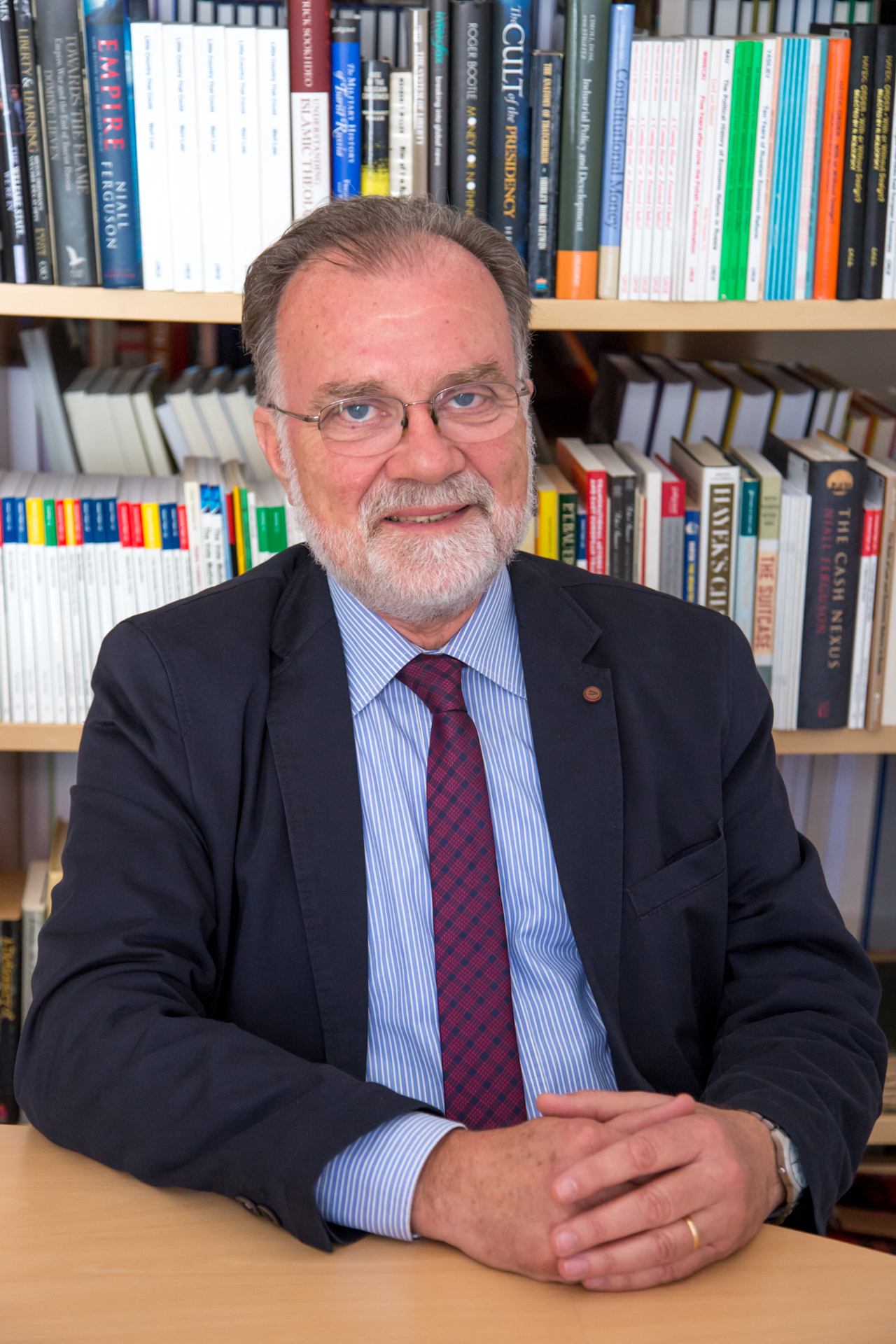
Fink, Andrej